
Free installation + 2-year warranty on every purifier · Installation and service across Mangaluru, Bengaluru and nearby towns · Book a lab test
Is Well Water Safe to Drink in Mangaluru? Here’s What the Data Says
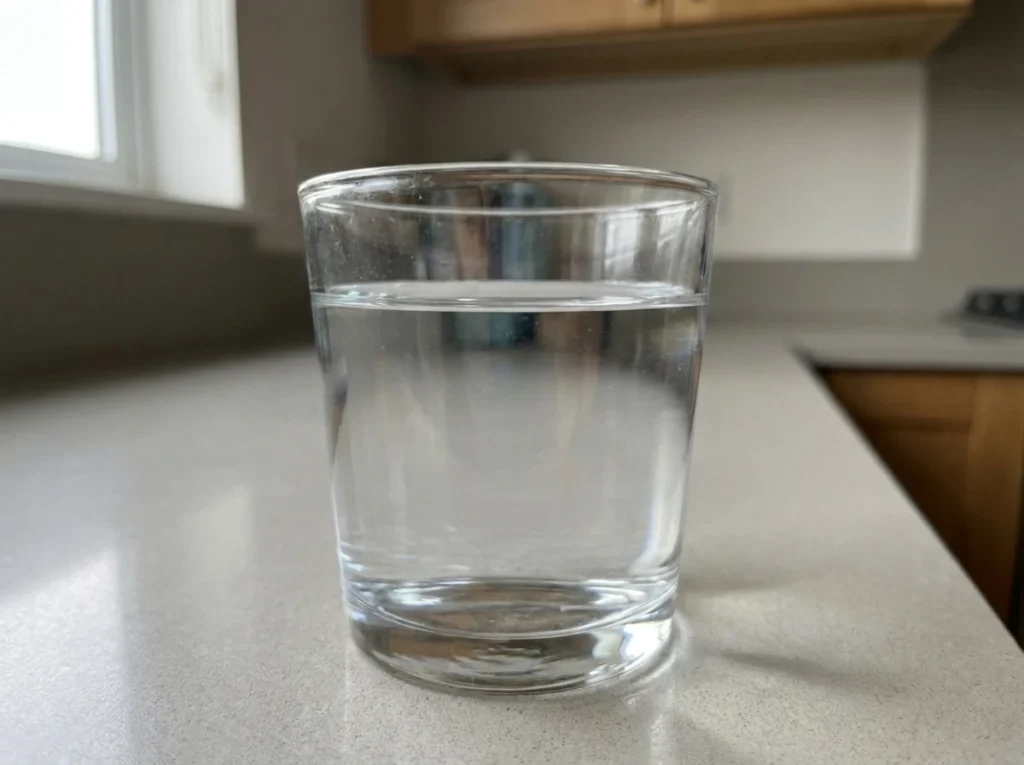
Thousands of homes in Mangaluru, Surathkal, Ullal and across Dakshina Kannada still run on open wells and borewells. Ask around and you will hear the same confident line: “Our well water is pure — we have been drinking it for generations.” The uncomfortable truth is that well water in coastal Karnataka can look crystal clear and still fail the national drinking-water standard on iron, acidity, bacteria or salt. Here is what published studies and government data actually say about the water under Mangaluru — and how to treat it correctly.
Mangaluru sits on laterite — and that shapes your well water
Most dug wells in Dakshina Kannada draw from the region’s porous laterite aquifer — the same rust-red rock you see in every roadside cutting. Laterite is rich in iron and aluminium oxides, and rainwater percolating through it tends to come out soft, low in dissolved solids, but often acidic and iron-laden. That is a very different starting point from the hard, high-TDS borewell water of interior Karnataka — and it changes which purifier you should buy.
What a ward-by-ward study of Mangalore city found
In 2023, researchers at Nitte University published a study in the Journal of Health and Allied Sciences NU that tested 180 natural water samples across all 60 wards of Mangalore City Corporation. The findings:
- 1 in 3 wards had acidic water. 20 of the 60 wards measured pH between 4.4 and 5.9 — well below the BIS acceptable range of 6.5–8.5 — which the authors attribute directly to the region’s laterite soil. Acidic water corrodes pipes, geysers and fittings, and slowly leaches metals into your drinking water.
- Iron hotspots exceeded the limit by up to 10×. The city-wide average was 0.19 mg/L, but Court ward measured 0.4 mg/L and Boloor ward hit 3.08 mg/L — more than ten times the BIS acceptable limit of 0.3 mg/L. Excess iron stains buckets and clothes reddish-brown, gives water a metallic taste and clogs filters.
- Colour and turbidity failures. Five wards (including Panambur, Mannagudda and Court) exceeded the permissible colour limit, and eight wards showed elevated turbidity.
- The good news: fluoride (0.6–0.9 mg/L) was within the safe limit in every ward, and arsenic was not detected in any of the 180 samples. Mangaluru does not share the fluoride problem of interior Karnataka districts.
The contamination you cannot see: bacteria
The Indian drinking-water standard IS 10500:2012 is absolute on this point: E. coli and total coliform bacteria must not be detectable in any 100 mL sample. Not “low” — zero. Their presence means faecal matter is reaching your well, typically from septic tanks, soak pits or monsoon runoff, and with it the risk of diarrhoeal disease, typhoid and hepatitis.
How do coastal Karnataka wells fare? A 2025 study published in Scientific Reports tested 43 wells on an estuarine island in neighbouring Udupi district and detected coliform bacteria in every single well, at counts of 49 to 2,400 MPN per 100 mL. Roughly 30% of the wells were rated outright unsuitable on the overall water-quality index. Open wells are especially vulnerable during the monsoon, when surface runoff carries contaminants straight into the water table.
Coastal wells: salt creeping in between the Netravathi and Gurupura
Mangaluru city is wedged between two tidal rivers — the Netravathi to the south and the Gurupura to the north — and pumping from coastal aquifers pulls seawater inland. A monitoring study of 26 open wells in the Gurupura–Netravathi basins reported TDS, conductivity and chloride exceeding Indian standards near the estuaries in both seasons, and a 2023 study in Water, Air & Soil Pollution mapped seawater intrusion across six coast-to-inland zones of the city. Intrusion is typically worst in summer, when river flow drops. If your well is within a few kilometres of the coast or an estuary and the water tastes even faintly brackish, salinity — not just bacteria — is your problem.
Nitrate: the quiet risk from septic tanks
The Central Ground Water Board’s Annual Groundwater Quality Report (December 2024, based on 15,259 samples nationwide) found nitrate above the 45 mg/L limit in 19.8% of samples — and named Karnataka among the three worst-affected states, with over 40% of its samples exceeding the limit. In dense coastal neighbourhoods where septic tanks sit close to wells, nitrate seeps silently into groundwater. It has no taste or smell, and in infants under six months it can cause methemoglobinemia — “blue baby syndrome” — where the blood loses its ability to carry oxygen. Boiling does not remove nitrate; it concentrates it.
The benchmark: what “safe” means in numbers
These are the key limits from the national drinking-water standard, BIS IS 10500:2012:
| Parameter | Acceptable limit | Permissible limit* |
|---|---|---|
| pH | 6.5 – 8.5 | No relaxation |
| TDS | 500 mg/L | 2,000 mg/L |
| Total hardness (CaCO₃) | 200 mg/L | 600 mg/L |
| Iron | 0.3 mg/L | No relaxation |
| Chloride | 250 mg/L | 1,000 mg/L |
| Nitrate | 45 mg/L | No relaxation |
| Turbidity | 1 NTU | 5 NTU |
| E. coli / coliform | Must be absent in any 100 mL sample | |
So — should you drink well water untreated?
Not without testing it first. Every failure mode documented above — acidity, iron, bacteria, nitrate, creeping salinity — is invisible in a glass. Clear, sweet-tasting well water from a laterite aquifer can be acidic enough to corrode your plumbing and carry coliform counts hundreds of times above the standard. The only honest answer comes from a water test: TDS, pH, hardness, iron and (for open wells especially) a bacteriological check.
Matching the treatment to what is actually in your well
- Bacteria in low-TDS well water (the most common Mangaluru profile): a UV or UF purifier disinfects without stripping minerals or wasting water. This is usually the right first choice for laterite well water that tests below 500 mg/L TDS.
- Iron above 0.3 mg/L (laterite hotspots like Boloor): an iron-removal pre-filter (oxidation + catalytic media) before the purifier — otherwise iron will stain fixtures and rapidly foul any RO or UV system.
- Brackish / seawater-affected wells, or TDS above 500 mg/L: an RO purifier (ideally RO+UV with a mineraliser) is the correct tool — RO is what actually removes dissolved salts and nitrate.
- Hardness above 200 mg/L (more common with borewells): a whole-home water softener protects geysers, pipes and appliances from scale.
- Monsoon turbidity: a sediment pre-filter ahead of everything, because UV cannot disinfect cloudy water.
We have broken down the RO vs UV vs UF decision in detail — with the government data on when RO is the wrong choice — in Which water purifier does your Mangaluru home actually need?
Get your well water lab-tested in Mangaluru
PURYN is headquartered in Surathkal, Mangaluru, and we test water across Dakshina Kannada every day — TDS, pH, hardness and iron, on the spot, at no cost. If your well water needs treatment, we will recommend only what the numbers justify: a RO+UV purifier for salty or high-TDS water, a UV/UF system for bacterial risk, an iron pre-filter for laterite iron, or a whole-home softener for hardness — with free installation and a 1-year warranty.
Book a lab test or call +91 90718 01000.
Keep reading


Not sure what your water needs? Get it lab-tested.
TDS, pH, hardness and iron – measured at your doorstep in Mangaluru and across our 50 km service area, with an honest recommendation based on the numbers.