
Free installation + 2-year warranty on every purifier · Installation and service across Mangaluru, Bengaluru and nearby towns · Book a lab test
Is boiling water enough in Mangaluru? What boiling does not remove
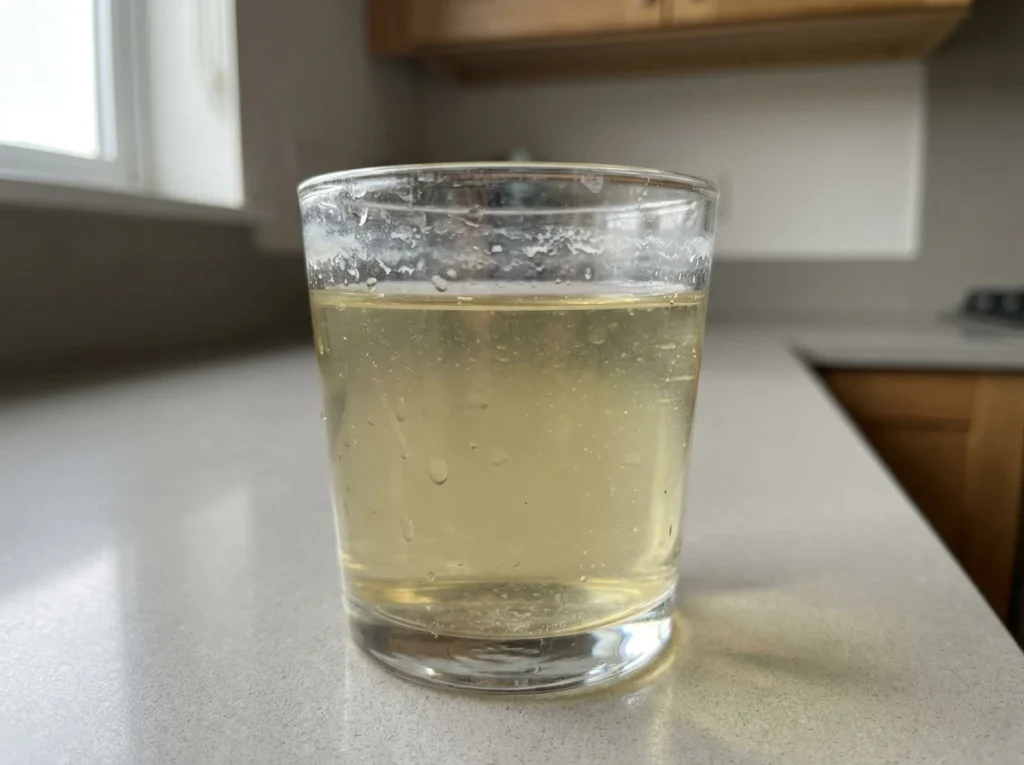
Boiling makes water germ-free. It does not make it safe. Boiling kills bacteria, viruses and protozoa, and against Mangaluru’s well water that matters more than most people realise. But it removes nothing dissolved in the water, and left on the stove too long it makes the dissolved part worse by concentrating it. Here is the evidence, and what to do instead.
Does boiling actually kill germs? Yes, and here it matters
Give boiling its due. The US EPA’s guidance is that bringing water to a rolling boil for at least one minute “is sufficient to kill pathogenic bacteria, viruses and protozoa”. The WHO treats boiling as one of the most reliable household disinfection methods there is. If your only problem were microbes, boiling would solve it.
And in coastal Dakshina Kannada, microbes are a real problem. A 2024 study in the Journal of Clinical and Diagnostic Research tested 20 household wells in Kinya Panchayat, Ullal taluk. Seventeen of them, 85%, tested positive for Escherichia coli. Half the wells returned counts of 351 to 550 MPN per 100 mL. The Indian standard, IS 10500:2012, allows exactly zero: E. coli “shall not be detectable in any 100 mL sample”. An earlier Mangaluru survey found 92.5% of water sources contaminated with coliforms. On Mudukudru island in the neighbouring Swarna-Sita estuary, all 43 wells sampled carried coliforms.
So the habit is not foolish. It is half an answer to a problem with two halves.
What boiling cannot remove from your water
Heat kills living things. It does nothing to dissolved chemistry. The EPA states it plainly: “boiling or disinfection will not destroy other contaminants, such as heavy metals, salts, and most other chemicals.”
That list covers almost everything Mangaluru households actually complain about. Salt from seawater pushing into coastal aquifers. Hardness that ruins geysers and leaves your skin tight after a bath. Iron that stains the sink orange. Nitrate seeping in from fertiliser and septic tanks. Not one of these is affected by a rolling boil. Water that tasted salty before boiling tastes salty after. Water that left scale in the kettle will leave scale in the kettle tomorrow.
| Problem | Does boiling fix it? | IS 10500:2012 acceptable limit |
|---|---|---|
| Bacteria, viruses, protozoa | Yes | E. coli not detectable in 100 mL |
| Dissolved salts (TDS) | No, concentrates them | 500 mg/L |
| Permanent hardness | No | 200 mg/L as CaCO₃ |
| Iron | No | 0.3 mg/L |
| Nitrate | No, concentrates it | 45 mg/L, no relaxation |
| Chloride / salinity | No | 250 mg/L |
Why long boiling can make water worse, not better
This is the part almost nobody is told. When water boils, water leaves as steam and everything dissolved in it stays behind. The pot holds less water but the same quantity of salts, so the concentration rises.
Researchers testing household methods of reducing total dissolved solids found that not one boiling test produced a lower TDS than the water started with. A twenty-minute boil pushed TDS up to 310 mg/L, roughly double where it began. Nitrate behaves the same way: repeated boiling cycles progressively concentrate it, which is why health agencies warn against boiling nitrate-heavy water for infant feeds. Nitrate is the one parameter IS 10500 allows no relaxation on at all, because of its link to methaemoglobinaemia, the “blue baby” condition.
Boiling hard water does drop temporary hardness, since calcium and magnesium bicarbonates break down and settle out. That white crust in your kettle is exactly that reaction. But permanent hardness, the sulphates and chlorides of calcium and magnesium, does not decompose with heat. It survives every boil.
Is drinking hot water the same as drinking boiled water?
No, and the difference is worth being precise about. Many households drink water warm as a daily habit rather than as a treatment step. Warm water at a comfortable drinking temperature has never reached a rolling boil, so it has not been disinfected at all. Heating to roughly 50°C, well below boiling, does not kill pathogens reliably.
There is a second trap even when water is properly boiled. Disinfection is not permanent. Boiled water stored in an open pot, ladled with a wet cup or poured into an unwashed bottle can pick up contamination again within hours. The boil protects the water in the vessel at that moment, not the water you drink from it tomorrow morning.
What Mangaluru’s water actually needs
Our water is not one thing. Municipal supply from the Netravathi, laterite open wells, deep borewells and coastal wells each fail differently, and the right answer follows the measurement, not the sales pitch. Hydrochemical surveys around Mangalore have found specific conductance and TDS exceeding both WHO and Indian desirable limits in a number of locations, with saltwater intrusion varying sharply from one locality to the next. On the estuarine islands nearby, well TDS ranged from 45 mg/L to 3,378 mg/L. Two houses on the same road can genuinely need different equipment.
- Microbes only, low TDS: UV with UF handles the biology without stripping minerals. Boiling also works here, which is why it is a reasonable stopgap.
- High TDS, salty or brackish taste: RO is the only household technology that meaningfully lowers dissolved solids.
- Hard water, scale on taps and geysers: a water softener, which is a plumbing-level fix, not a drinking-water one.
- Orange staining, metallic taste: iron removal ahead of anything else, or the iron will foul the purifier you install after it.
Common questions
How long should I boil water to disinfect it?
A rolling boil for at least one minute, per EPA guidance. Longer does not disinfect better, and past that point you are only concentrating dissolved salts.
Does boiling reduce TDS?
No. It raises it. Controlled testing found no boiling method that lowered TDS below the starting value, because evaporation removes water and leaves the solids behind.
Is boiled water safe for a baby’s feed?
Only if the water is low in nitrate to begin with. Boiling concentrates nitrate, and infants are the group most at risk from it. If you use borewell or well water for feeds, get nitrate measured before relying on boiling.
My kettle has white scale. Is my water unsafe?
Scale indicates hardness, not contamination. Hardness above 200 mg/L as CaCO₃ exceeds the IS 10500 acceptable limit and damages appliances, but it is not a health hazard the way E. coli or nitrate is. It calls for a softener, not a purifier.
If I have a purifier, should I still boil?
Not routinely. A working UV or RO system already handles disinfection. Boiling on top of it adds fuel cost and, with long boiling, concentrates whatever the purifier left behind. Boil during a declared contamination event or if your system is out of service.
Test first. Then treat what you actually have.
Boiling is a good habit that solves one half of the problem and quietly worsens the other. The only way to know which half you are dealing with is to measure: TDS, hardness, iron and nitrate, from your own tap.
Puryn does a lab test of your water across Mangaluru and Surathkal. Our technician measures your water in front of you, explains what the numbers mean, and tells you honestly if boiling or a simple UV unit is already enough for your house. If you need nothing, we will say so.
Sources: Nithyashree BV, Naik S, Leena KC, “Physical and Bacterial Parameters of Well Water in Selected Rural Households of Mangaluru”, Journal of Clinical and Diagnostic Research, 2024; US EPA, Emergency Disinfection of Drinking Water; Bureau of Indian Standards, IS 10500:2012 Drinking Water Specification; WHO, Nitrate and Nitrite in Drinking-water; research on household TDS-reduction methods, PMC8478203; groundwater quality assessment of estuarine islands of coastal Karnataka, PMC12460876.
Next step: book a lab test of your water, then compare the PURYN e-series to match the result to a model.
Keep reading


Not sure what your water needs? Get it lab-tested.
TDS, pH, hardness and iron – measured at your doorstep in Mangaluru and across our 50 km service area, with an honest recommendation based on the numbers.