

Free installation + 2-year warranty on every purifier · Installation and service across Mangaluru, Bengaluru and nearby towns · Book a lab test
Does RO remove essential minerals? What the WHO research actually says
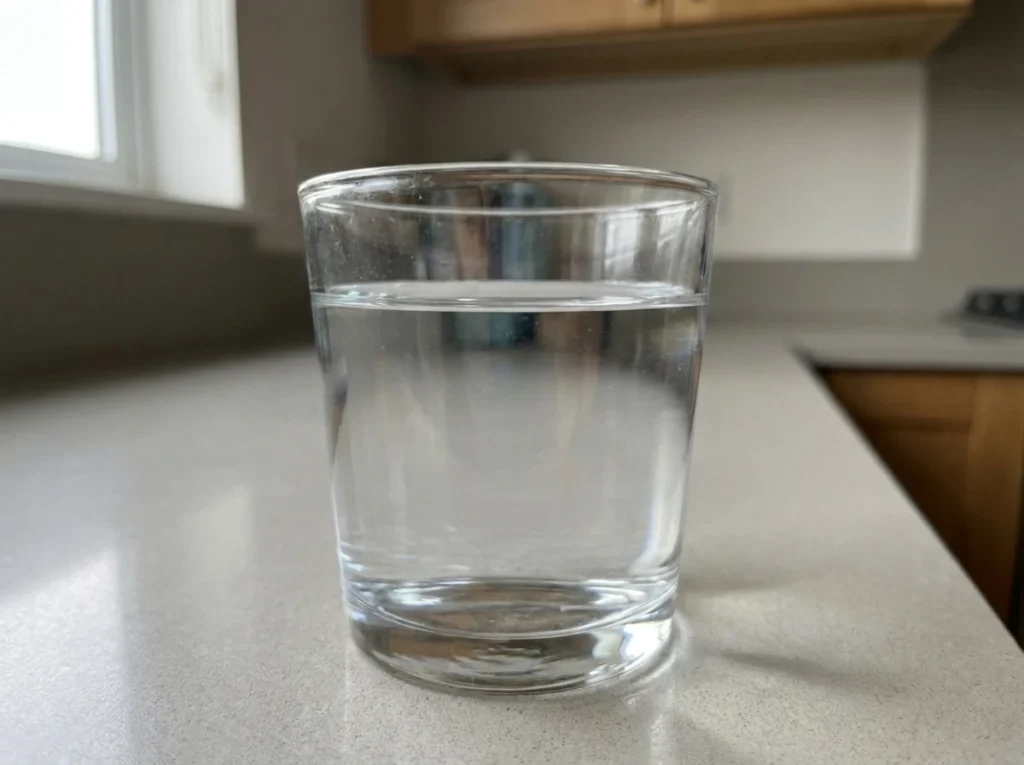
Yes, RO removes minerals. Membranes reject roughly 90 to 99% of dissolved solids, including about 97% of calcium and 96% of magnesium. The real question is whether that matters for your health, and the honest answer is: it depends entirely on how mineralised your water was to begin with. For most Mangaluru homes the answer is no. For some, it is worth taking seriously. Here is how to tell which you are.
What the WHO actually says about demineralised water
The most-cited work here is the WHO’s chapter on health risks from drinking demineralised water, by Frantisek Kozisek. It is worth quoting its numbers accurately, because both sides of this argument tend to misuse it.
Based on the available research, it reports recommended levels for drinking water of a minimum 10 mg/L magnesium with an optimum of about 20 to 30 mg/L, and a minimum 20 mg/L calcium with an optimum of about 50 mg/L (range 40 to 80). For total hardness, the sum of calcium and magnesium is put at 2 to 4 mmol/L. Water with a TDS of roughly 400 mg/L is described as physiologically optimum.
The chapter also documents real effects from very low mineral water: increased urine output, increased elimination of sodium, potassium, chloride, calcium and magnesium, and in the epidemiological literature it cites, associations with cardiovascular and gastric conditions in populations drinking demineralised supply.
The counterweight is equally documented: drinking water is normally a minor source of these minerals compared with diet. A person eating a normal Indian diet gets the large majority of their calcium and magnesium from food, not from the tap.
The cooking effect most people never hear about
There is one finding in that WHO chapter that deserves more attention than it gets. When low-mineral water is used for cooking, it draws minerals out of the food itself. The reported losses reach up to 60% for magnesium and calcium, and higher for some trace elements: around 66% for copper, 70% for manganese, 86% for cobalt.
If you boil rice, dal and vegetables in heavily demineralised water every day, the loss is not from the water. It is from the food. This is the strongest practical argument against running very low TDS water throughout a kitchen without thinking about it.
So should you avoid RO? Only if you do not need it
Here is where the mineral debate collides with Mangaluru reality. RO exists to solve a problem: dissolved solids too high to drink comfortably or safely. IS 10500:2012 sets the acceptable TDS limit at 500 mg/L, with 2,000 mg/L as the outer permissible limit.
Coastal Dakshina Kannada has water on both sides of that line. Surveys of estuarine wells in the region have recorded TDS from 45 mg/L to 3,378 mg/L. A house at 3,378 mg/L needs RO and the mineral question is not close. A house at 150 mg/L that installs RO anyway is stripping minerals from water that was already fine, wasting water in the process, and paying for the privilege.
| Your measured TDS | Is RO justified? | Better fit |
|---|---|---|
| Under 200 mg/L | No | UV+UF handles microbes, keeps minerals |
| 200–500 mg/L | Usually not | UV+UF, unless taste or specific ions say otherwise |
| 500–1,000 mg/L | Yes | RO+UV+UF |
| Above 1,000 mg/L | Clearly | RO+UV+UF, brackish or coastal supply |
What about the water RO sends down the drain?
This is the second fair criticism of RO and it deserves a straight answer. Standard domestic RO systems discard roughly three to four litres for every litre they purify, which is a recovery rate around 20 to 30%. Better modern units reach ratios closer to 2:1 or even 1:1.
Two practical responses. First, do not install RO where the water does not need it, which is the same conclusion as the mineral argument. Second, if you do need RO, catch the reject water. It is not sewage. It is simply more concentrated than what went in, and it is perfectly usable for mopping, flushing, washing vehicles or watering plants that tolerate it. A bucket under the reject line recovers most of what people describe as waste.
Common questions
Is RO water bad for you?
Not if you needed RO in the first place. Water at 1,500 mg/L TDS treated down to 100 mg/L is a clear improvement in safety and taste. The concern applies to running already-low-TDS water through RO for no reason, and to cooking daily in very low mineral water.
Do mineral cartridges and alkaline stages help?
They add back a portion of what the membrane removed, which is a reasonable answer if your source water genuinely needs RO. It is not a reason to install RO you did not need. The cleaner solution is always to match the technology to the measurement.
What TDS should my drinking water be?
IS 10500 sets 500 mg/L as the acceptable ceiling. The WHO demineralisation literature points to roughly 400 mg/L as physiologically optimum. Somewhere in the low hundreds is a comfortable place to land, which is why stripping water to near zero is not the goal.
Does boiling put the minerals back?
No, and it does not remove contaminants either. We covered what boiling does and does not do in this separate guide.
Measure, then decide
The mineral argument and the wastage argument both resolve the same way: RO is right when your water needs it and wrong when it does not. That is a measurement, not an opinion, and it takes fifteen minutes.
Puryn lab-tests your water across Mangaluru and Surathkal, before and after installation. If your TDS comes back low, we will tell you to buy the UV+UF configuration rather than RO, and it costs you less.
Sources: Kozisek F., “Health Risks from Drinking Demineralised Water”, in WHO Nutrients in Drinking Water; Bureau of Indian Standards, IS 10500:2012; groundwater quality assessment of estuarine islands of coastal Karnataka (PMC12460876); published RO membrane rejection and domestic recovery-rate data.
Choosing between builds? A lab test settles it, and the e-series comparison shows both builds for every model.
Keep reading


Not sure what your water needs? Get it lab-tested.
TDS, pH, hardness and iron – measured at your doorstep in Mangaluru and across our 50 km service area, with an honest recommendation based on the numbers.